Ute and 4x4 tuning, mobile or at the Papamoa workshop
Find your ute, then see the numbers
- Estimated gains for your model, before you book.
- Hilux 2.8: an estimated 250 hp and 650 Nm.
- Amarok V6: an estimated 320 hp and 680 Nm.
- Every map written by Dave from your ute's own live data, in your driveway or at the workshop.
- 4.9 stars from 100+ Google reviews
- 17+ years' mechanical experience, and he does every job himself
- Mobile to your driveway, yard, farm race or worksite, or at the Papamoa workshop
- Remap from $1,299 incl GST, travel inside Bay of Plenty and Waikato included
- 4.9 from 100+ Google reviews
- 17+ years' mechanical experience
- Travel included
Get a price for your vehicle
Make, model, year and rego. Dave comes back with a price and a straight answer on whether it is worth doing.
4.9
From 100+ Google reviews
17+ years
Mechanical experience
320 hp
Estimated, Amarok V6
From $1,299
Remap, GST and travel included
Estimated gains, by model
The numbers, model by model
Find something close to yours. If your model is not in the table, ring with the make, model, year and what is already fitted. Dave will tell you what your specific vehicle can safely make before you commit a cent.
| Vehicle | Year | Estimated after tuning |
|---|---|---|
| Toyota Hilux 2.8 1GD | 2021 | 250 hp / 650 Nm |
| Toyota Fortuner 2.8 1GD | 2023 | 250 hp / 650 Nm |
| Toyota Hilux 3.0 1KD, turbo and injectors | 2010 | 260 hp / 610 Nm |
| VW Amarok 3.0 V6 TDI | 2022 | 320 hp / 680 Nm |
| Ford Ranger PX2 3.2 | 2018 | 240 hp / 580 Nm |
| Mazda BT-50 3.2 | 2014 | 240 hp / 580 Nm |
| Mazda BT-50 3.0 4JJ3 | 2021 | +60 hp / +140 Nm |
| Nissan Navara 2.3 bi-turbo | 2021 | 215 hp / 510 Nm |
| Mercedes-Benz X-Class V6 | No year on record | 300 hp / 700 Nm |
| Hino Dutro 4.0 | 2012 | +30 percent torque |
These are estimated gains, not measured dyno results. Actual results depend on the vehicle and its engine condition, as well as fuel and what hardware is fitted. Dave will tell you what your specific vehicle can safely make before you commit a cent.
The bit that actually annoys you
It is fine until the trailer is on the back
Two thirds of the way up the hill with the boat behind you and it has dropped two gears to hold the speed. Around town the ute is fine. Loaded, on a hill, into a headwind, it is not.
Nothing is broken. Factory maps leave headroom because the manufacturer has to cover the worst fuel and the worst climate on the planet. Your ute is running that compromise on New Zealand diesel, on your roads.
Or the problem is not power at all. It is a warning light and limp mode halfway through a job, which is the part that costs more than the repair does.
And then there is the worry. You have read the stories about engine damage. Those stories come from generic files flashed in blind, and Dave has been paid to repair the results: failed injectors, cooked turbos, transmission problems. That is a good reason to be careful about who touches your ute. It is not a reason to leave it alone.
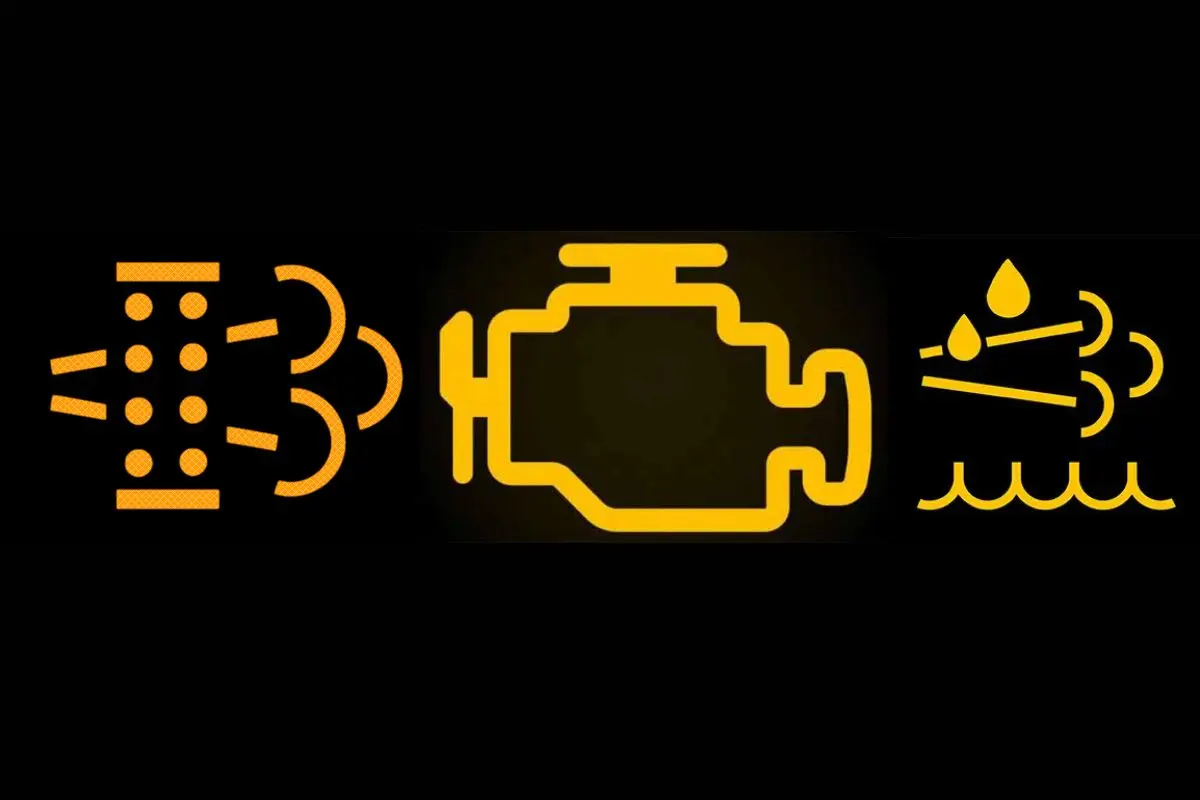
EGR and DPF faults put a vehicle into limp mode mid job. That downtime costs more than the repair does.
Why the number holds
Written for your ute, not for one somewhere else
A generic file was written for one example of the engine somewhere else in the world, in conditions that had nothing to do with yours. Every map Dave writes comes off that vehicle’s own live data.
Mobile or workshop
Driveway, yard, farm race or worksite, anywhere in Bay of Plenty and Waikato, or the Papamoa workshop. The same base price either way.
No generic files, ever
Every map is written from that vehicle's own live data, then logged and road tested before he packs up.
Your factory file is kept
Backed up and kept, per vehicle, so the software tune can be restored. A full inspection happens before anything is modified.
A written record
A written record of exactly what changed, for your own records and for your insurer.
Tell Dave what you are driving and he will give you a straight answer, including if the answer is that it is not worth doing.
Inside the job
What the work actually looks like
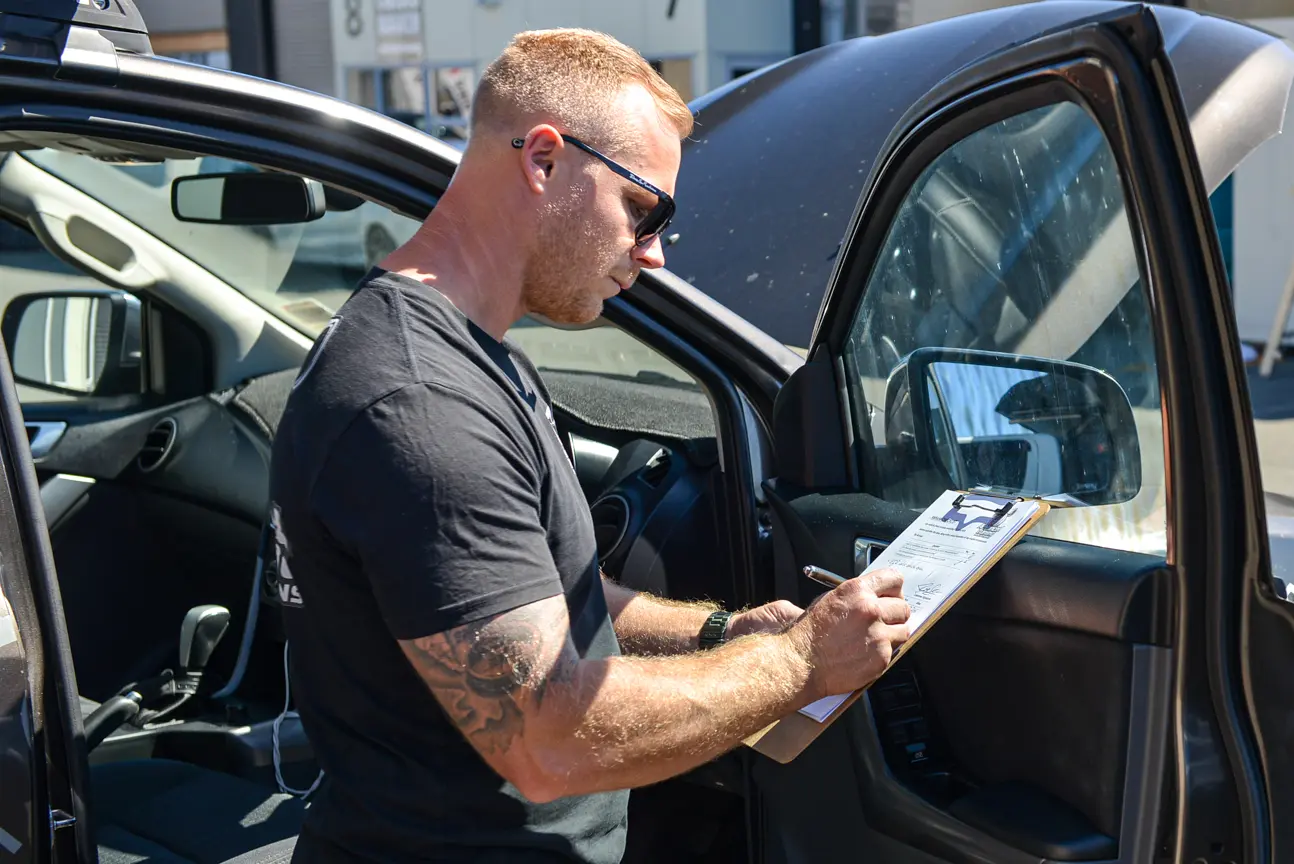
The $195 diagnostic call out. Full fault code scan and live data at your place, and an honest answer on whether tuning helps. Credited back if you book a tune.
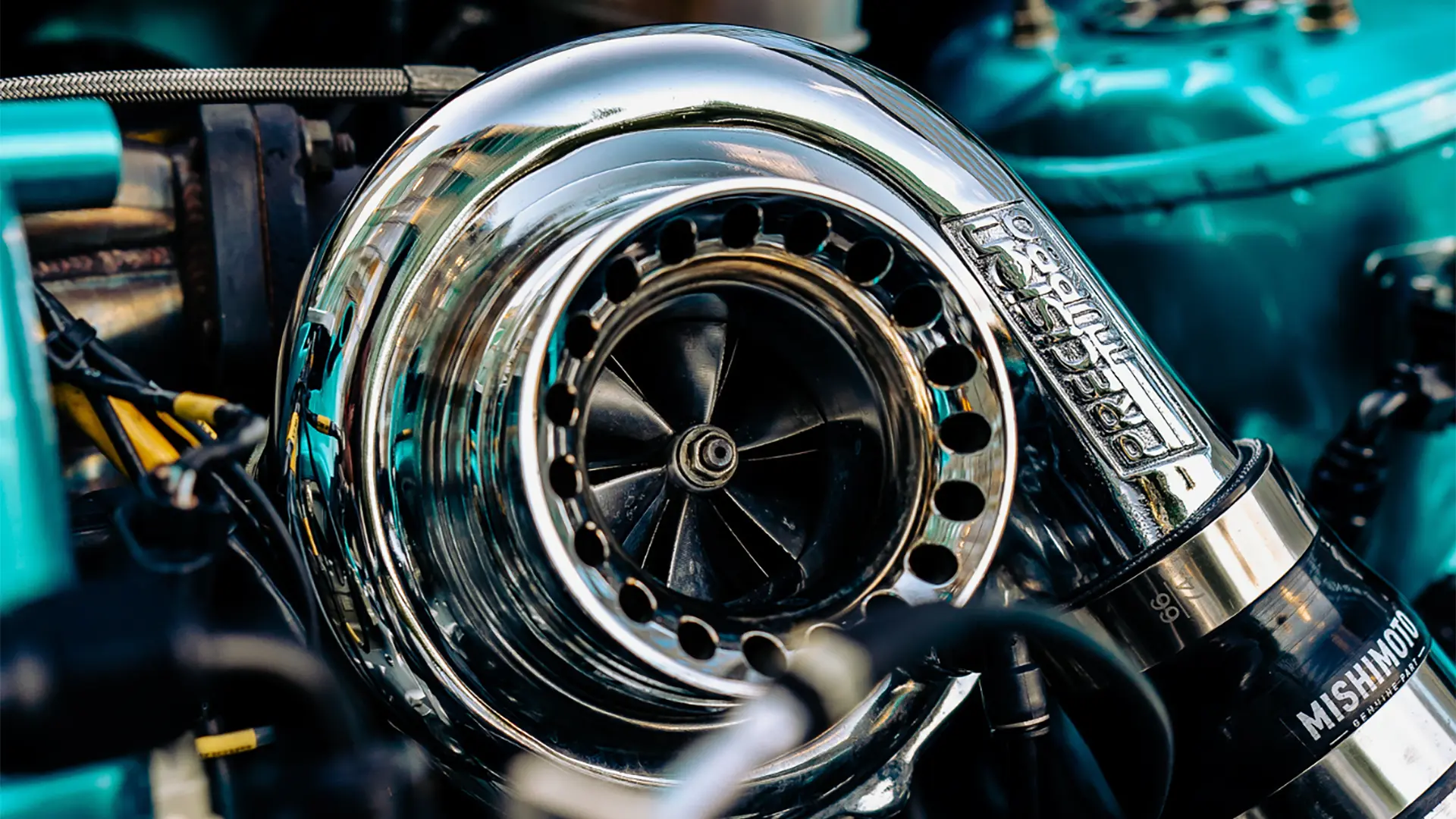
Limits are set inside what the engine, turbo and transmission can safely take. The vehicle is checked before the map is touched.
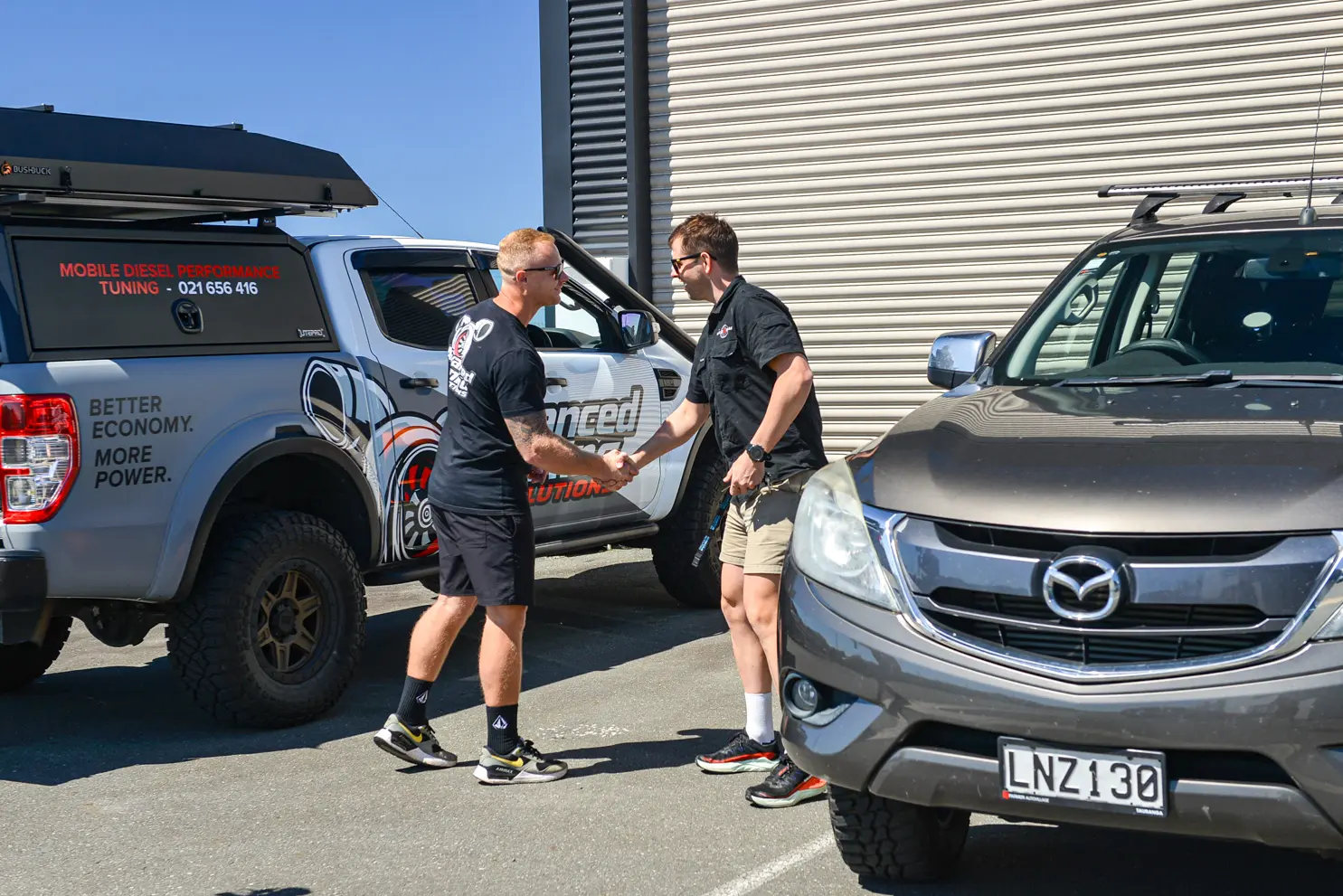
Three or more vehicles at one address and the per vehicle rate drops. Done on site, one visit, one invoice.
Tell Dave what you are driving and he will give you a straight answer, including if the answer is that it is not worth doing.
4.9 stars from 100+ Google reviews
Ute owners, in their own words
"Dave tuned my 3.2 Ranger, made a massive improvement. I went for both engine and trans tune. Ute runs way way stronger up hills and towing. Fuel burn has reduced by approx 2 litre/100 k. Great bang for the $$ spent, highly recommend Dave"
John Ryan, Ford Ranger 3.2
"Dave recently did some work on my px3 ranger. An EGR delete, performance tune and transmission tune. It’s like a totally different vehicle. Definitely recommend if your thinking about getting it done give Dave a call. He will sort you out."
Tim Cooper, Ford Ranger PX3
"Dave is awesome, extremely knowledgeable. I called on Monday with big issue with my px1 ranger, he was at my house within the hour to have a look and then came back first thing Tuesday morning ready to go and had everything sorted in a few hours! EGR delete and tune with a bunch of extras"
Michael Vandervlerk, Ford Ranger PX1
"Excellent service and results from Dave and the ute feels like it has a new lease on life, the upgrades have made a massive difference in power and the smoothness of gear changes"
Jonathon Ogden, diesel ute
"Good knowledge and actually told me if there was any issues. Even better I didn’t have to leave home, he came to me and got a great combo deal for 2 trucks. All in all, great experience"
Apiata Maaka, two work trucks
"Dave came over to Gisborne and remap my Mazda bt50 2014. Mean power now, thanks for your mahi."
Herbert Osborn, Mazda BT-50, Gisborne
Two ways to get it done
A custom map, against a database file
The cheaper quote is usually a generic file bought off a database and flashed in without anyone driving the vehicle. Here is the difference, line by line.
| The question | A generic file | A custom map from Dave |
|---|---|---|
| Where the map comes from | A generic file bought off a database, written for one example of the engine somewhere else in the world | Written from your vehicle's own live data |
| Who drives the vehicle | Flashed in without anyone driving it | Live data logging and road testing before he packs up |
| When it goes wrong | Dave has been paid to repair the results: failed injectors, cooked turbos, transmission problems | Full inspection first, then limits set inside what the engine, turbo and transmission can safely take |
| Where the work happens | Ask before you book | At your address, or at the Papamoa workshop |
Tell Dave what you are driving and he will give you a straight answer, including if the answer is that it is not worth doing.
How a booking runs
Four steps, one visit
01. The phone call
Make, model, year and what is already fitted. Dave confirms the final quote and tells you what your vehicle can safely make. If it is not a good candidate, he says so before any money changes hands.
02. The deposit
$200 secures the booking and comes off the final price.
03. Mobile or workshop
Full inspection first, then the original ECU file is backed up and kept safe. The map is written from your ute's own live data, with live data logging and road testing.
04. The written report
A written report of exactly what changed. A straightforward mobile remap typically takes 3 to 4 hours.
What is included
What a remap actually comes with
- A custom map written for your vehicle, from its own live data
- Live data logging and road testing
- The factory file backed up and kept safe
- A written report of exactly what changed
- A straightforward mobile remap typically takes 3 to 4 hours
- Travel inside Bay of Plenty and Waikato included in the price
- A full inspection before anything is modified
Booking and deposit
$200 secures a booking and comes off the final price. The final quote is confirmed once Dave knows the make, model, year and what is already fitted.
If a vehicle is not a good candidate he says so before any money changes hands.
WOF, emissions and your insurer
The rule that applies. The Land Transport Rule: Vehicle Exhaust Emissions 2007 says at clause 3.2 that a vehicle’s exhaust emissions system or exhaust control equipment must not be modified so as to prevent the vehicle passing the metered test in Schedule 2. That applies to most cars, utes, vans and trucks certified for entry into service in New Zealand on or after 1 May 2008. Removing a DPF, an EGR system or an AdBlue system on a vehicle in that group will normally prevent it passing that test, so the modification is not permitted whether or not anybody spots it. The Rule also defines emissions control equipment as including on-board diagnostics, so the software side is inside the same regime. Clause 5.1 puts a duty on the person doing the work as well as the owner.
A remap on its own. If the emissions hardware stays fitted and the vehicle still passes the visible smoke test, there is no exhaust emissions reason for rejection at WOF. This is the safest path and it is what Dave recommends for most road vehicles.
DPF removal and the WOF. For a vehicle first registered in New Zealand on or after 1 May 2010 and manufactured from 1 January 1990, removing the DPF is a named reason for rejection at WOF unless you hold written evidence from an entry certifier that it passed a prescribed metered emissions test in that condition. Vehicles first certified for entry before 1 May 2008 sit outside that reason for rejection.
EGR and AdBlue. Neither is named as a reason for rejection in the WOF inspection manual the way the DPF is. That is a point about the inspection, not about clause 3.2, which still applies to in-scope vehicles. The visible smoke test also still applies.
Insurance and certification. Tell your insurer. NZ insurers treat anything beyond factory spec as a modification, and an undeclared one is how claims get declined. Dave gives a written spec of what changed so it can be forwarded. LVV certification is a separate structural and safety regime and is not a route to legitimising emissions equipment removal.
Disclaimer. This is general information about New Zealand rules current at the time of writing, not legal advice, and the rules change. Sources: Land Transport Rule: Vehicle Exhaust Emissions 2007 clauses 3.2 and 5.1, and the NZTA in-service WOF inspection manual, exhaust emissions. Dave will walk through your specific vehicle and situation on the phone before any work is booked.
The same price mobile or at the workshop
Ute tuning prices
The final quote is confirmed once Dave knows the make, model, year and what is already fitted. A $200 deposit secures the booking and comes off the final price.
ECU remap
from $1,299
Including GST. A custom map written for your vehicle. Live data logging and road testing, the original ECU file backed up and kept safe, and a written report of exactly what changed. The same price mobile or at the workshop. A straightforward mobile remap typically takes three to four hours.
What Dave recommends for most road vehicles
Remap plus emissions solution
$1,590
Including GST. A custom remap and one emissions software solution, booked together. Software only. Read the WOF and emissions section on this page first.
Diagnostic call out
$195
Including GST. Dave comes to you. Full fault code scan and live data, then an honest answer on whether tuning helps. Credited back if you book a tune.
Emissions solution
Software only
$450 each
Including GST. ECU software for one emissions system. Software only: not a diagnosis, removal or parts package. Which options are open to your vehicle depends on the WOF and emissions section on this page, so this always starts with that conversation.
Hourly rate
$140 an hour
Including GST. Workshop time, modifications and anything a fixed price does not cover.
Fleet, 3 or more
Call
The per vehicle rate drops with volume. Done on site. One invoice, one visit.
Prices cover travel within the standard service area and are the same mobile or at the workshop. Performance figures vary by vehicle, condition and fuel. Emissions system modifications may affect WOF compliance and it is the owner’s responsibility to declare modifications to their insurer.
The software side is not a one way door
What happens if you change your mind
The factory file is kept
Backed up and kept, per vehicle, so restoring the software tune is straightforward. There is a small charge for time and travel if it is done later.
The diagnostic is credited back
The $195 call out is credited back against the price when you book a tune.
A written record for your insurer
A written spec of exactly what changed, so it can be forwarded. NZ insurers treat anything beyond factory spec as a modification, and an undeclared one is how claims get declined.
He talks people out of it
Several of his reviews are from people he told not to bother. If a vehicle is not a good candidate, he says so before any money changes hands.
Straight answers
What ute owners ask first
Factory maps leave headroom because manufacturers have to cover the worst fuel and the worst climate on the planet. Dave works inside what the engine, turbo and transmission can safely take, and he checks the vehicle before touching the map. The damage stories come from generic files flashed in blind.
A dealer can detect a remap on their diagnostic gear. In practice manufacturers decline the affected components rather than the whole warranty. The original ECU file is backed up, so the software tune can be restored before a dealer service.
Usually, but only if your right foot behaves the same. More torque low down means fewer downshifts and lower revs at cruise. Savings of around 15 to 20 percent are possible, depending on the vehicle and how it is driven. One customer reported about two litres per 100 km less on a 3.2 Ranger after an engine and transmission tune, which is one customer’s result, not a typical one. If you use the extra power you will not save fuel.
A cheap tune is usually a generic file bought off a database and flashed in without anyone driving the vehicle. Dave has been paid to repair the results: failed injectors, cooked turbos, transmission problems.
The software tune can. The original ECU file is kept, so the software can be restored to factory. Physical upgrades are a separate job. There is a small charge for time and travel if it is done later.
A straightforward mobile remap typically takes 3 to 4 hours at your location, with travel inside Bay of Plenty and Waikato included in the price. Diagnostic jobs, modifications and workshop dyno bookings take longer, and you can also bring the ute to the workshop at Unit 1, 2 Ashley Place, Papamoa.
Ring with the make, model, year and what is already fitted. Dave will tell you what your specific vehicle can safely make before you commit a cent, and if it is not a good candidate he will say so before any money changes hands.
Yes. The mobile service area is Bay of Plenty and Waikato: Te Puke, Tauranga, Mount Maunganui, Papamoa, Rotorua, Whakatane, Hamilton, Cambridge and Matamata, and Dave has travelled to Gisborne. The workshop is at Unit 1, 2 Ashley Place, Papamoa.
One call and you will know
Find out what yours will make
Ring Dave with the make, model, year and what is already fitted. He will tell you what your specific vehicle can safely make before you commit a cent, and if it is not a good candidate he will say so.
Prefer to talk it through? Ring Dave on 021 656 416. He answers his own phone.
Advanced Tuning Solutions
Unit 1, 2 Ashley Place, Papamoa, Bay of Plenty
Phone 021 656 416
Email bookings@advancedtuningsolutions.co.nz
WhatsApp 021 656 416
Serving Te Puke, Tauranga, Mount Maunganui, Papamoa, Rotorua, Whakatane, Hamilton, Cambridge and Matamata.
Dave Seuser has 17+ years’ mechanical experience and trained first as an electrician in Germany. Family owned and New Zealand registered since 2023.
Prices cover travel within the standard service area and are the same mobile or at the workshop. Performance figures vary by vehicle, condition and fuel. Emissions system modifications may affect WOF compliance and it is the owner’s responsibility to declare modifications to their insurer.